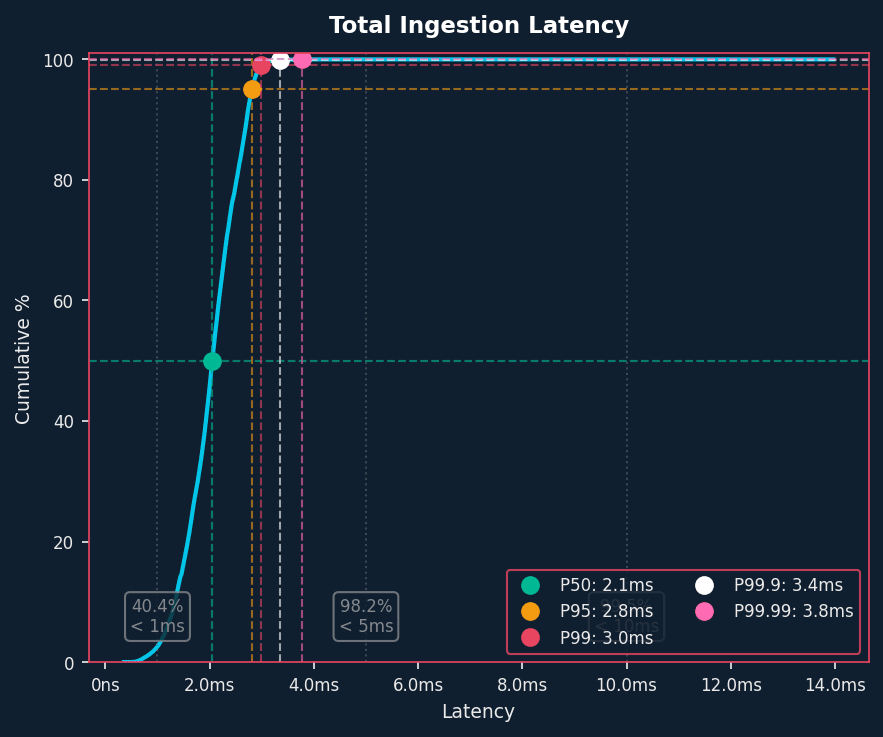
End-to-end latency is the system

Measured performance

Real-Time Industrial Control Has a Strict Timing Budget

Fast Message Transport Is Not Enough

How DADOS Delivers Control-Speed State at Scale

Why it Matters

DADOS Flow — Real-Time Transformation

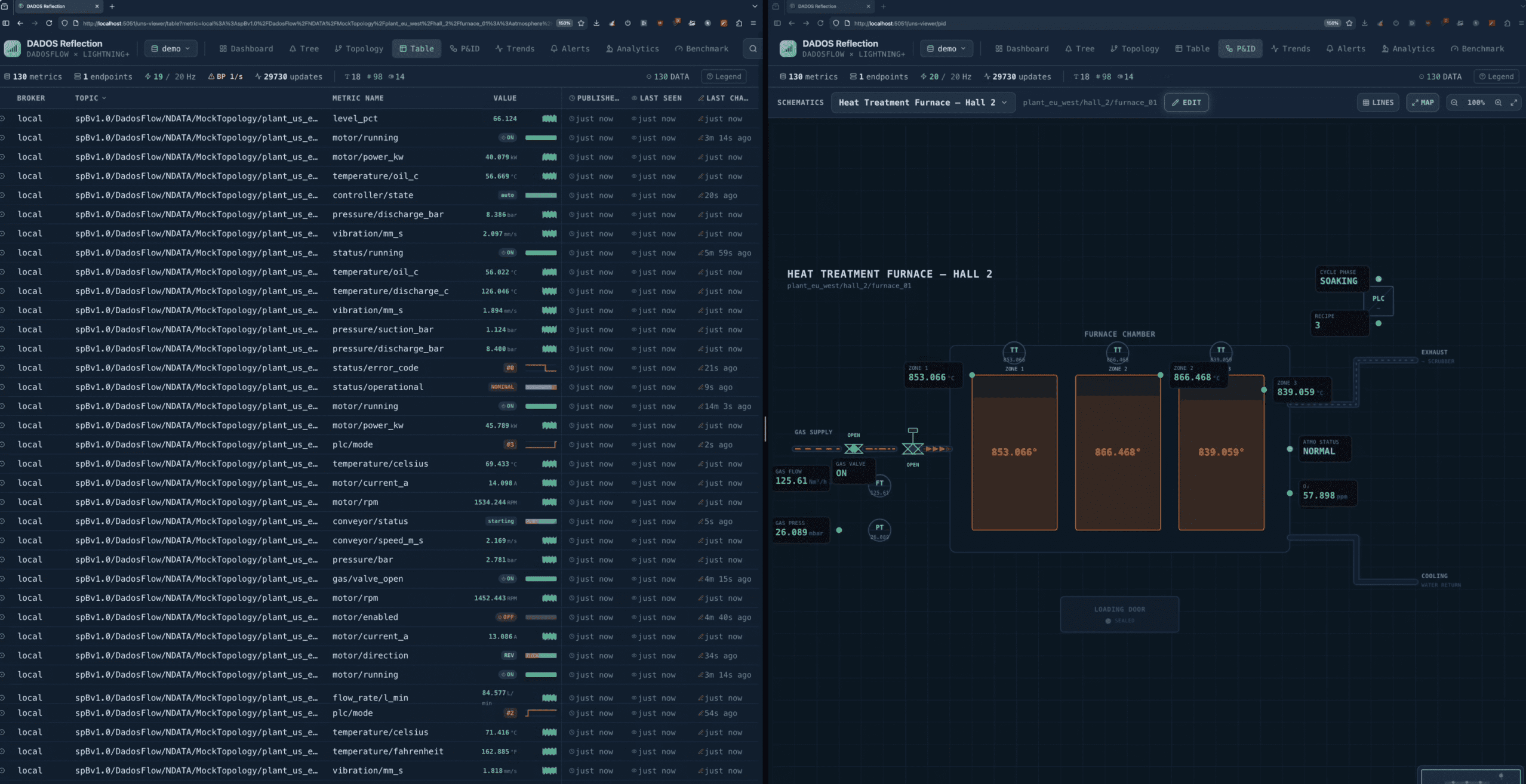
DADOS Current — Live State

DADOS Lightning+ — Decision Latency

Why it matters

Why a New Architecture is Required

Why Existing Stacks Fall Short

How DADOS Meets the Requirement

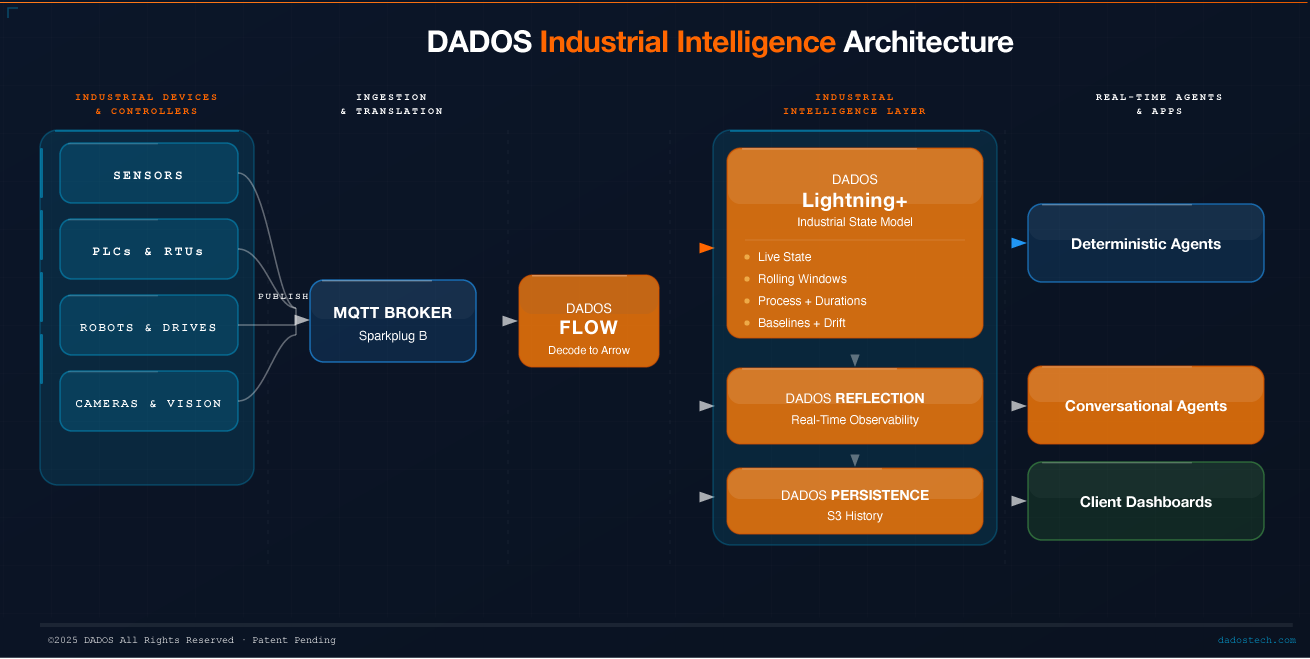
Flow → Current → Lightning+

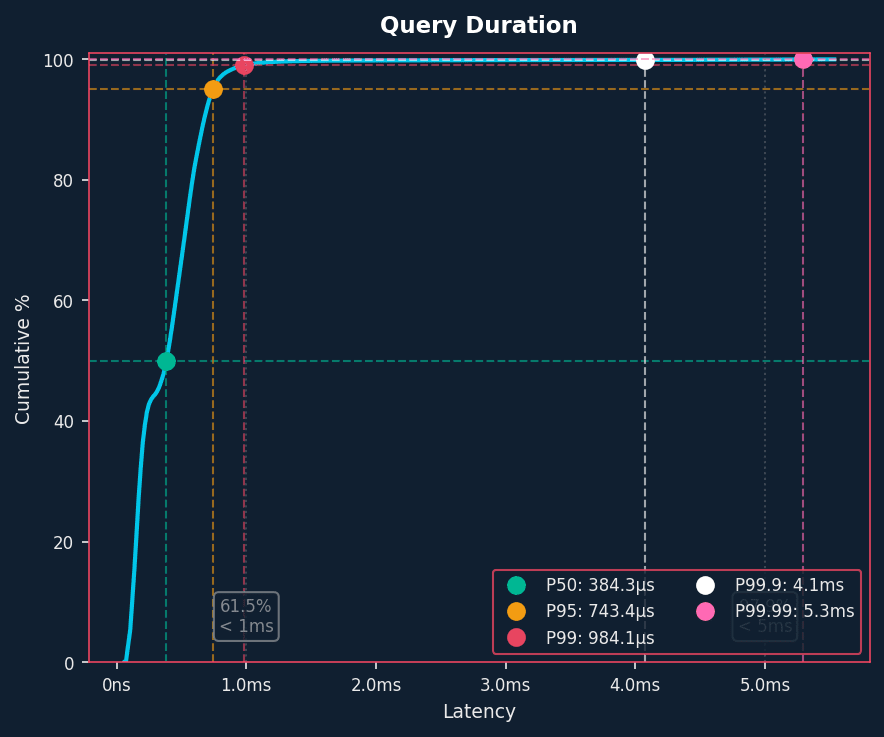
Median latency is 2.89 ms, with P99 remaining under 5 ms across 215 million queries over 24 hours, delivered through the Lightning+ API.

DADOS benchmarks the only latency that matters

What We Measure

How End-to-End Latency Is Defined

Why These Numbers Matter

What This Enables

See what we can do for you!

Demo videos of DADOS Flow, DADOS Lightning+ and DADOS Current.

Real-Time Data Stream Demo

In-memory live data stream showing a chart and dataframe.

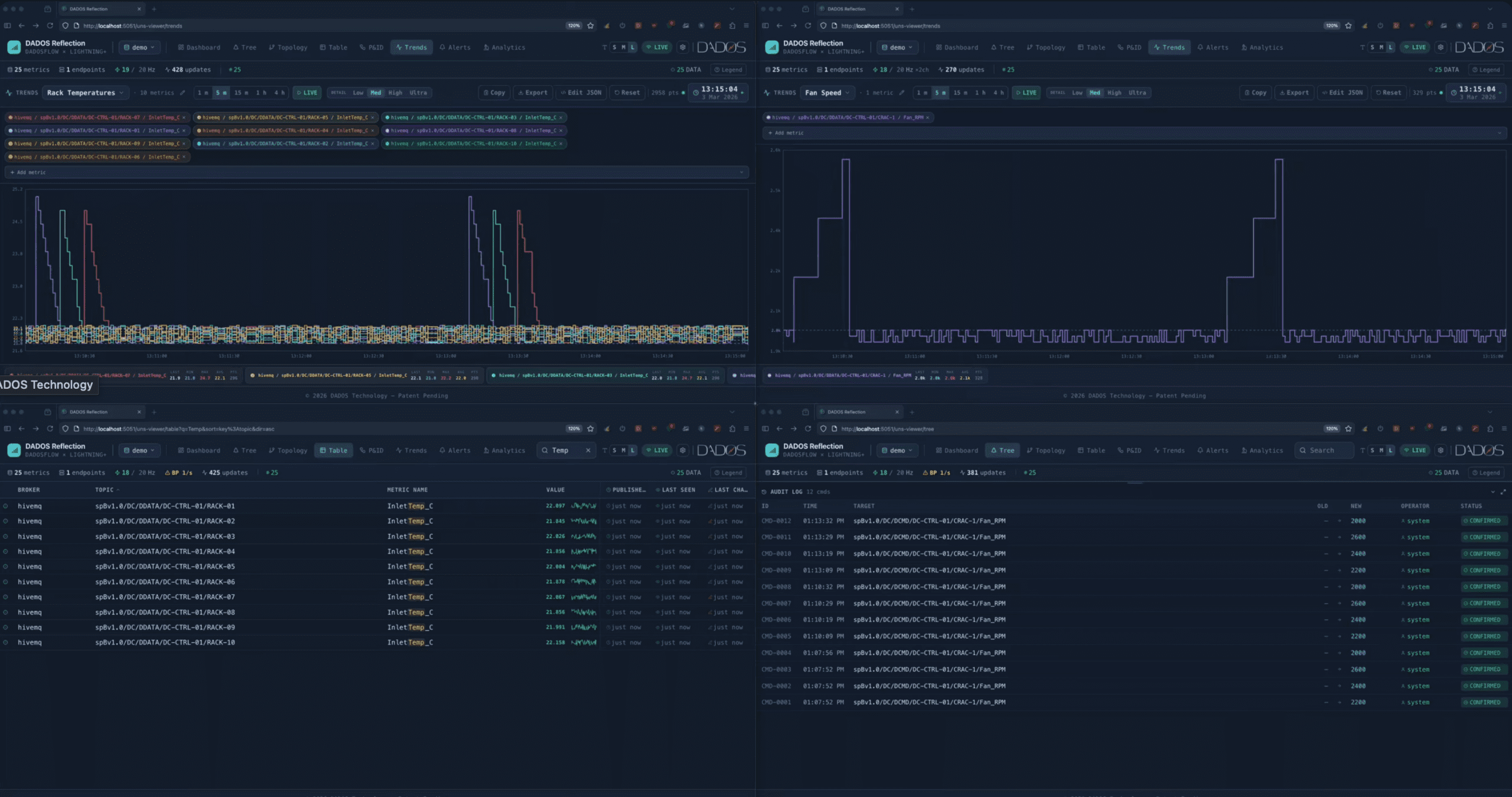
Data Center Control Demo

Ten server racks operate in steady state while CRAC-1 maintains cooling at 2000 RPM. Three racks overheat to 25 °C, creating a localized thermal fault.

Live telemetry triggers an automatic response, ramping fan speed to 2600 RPM. Temperatures stabilize and PUE adjusts — all within real-time control limits.

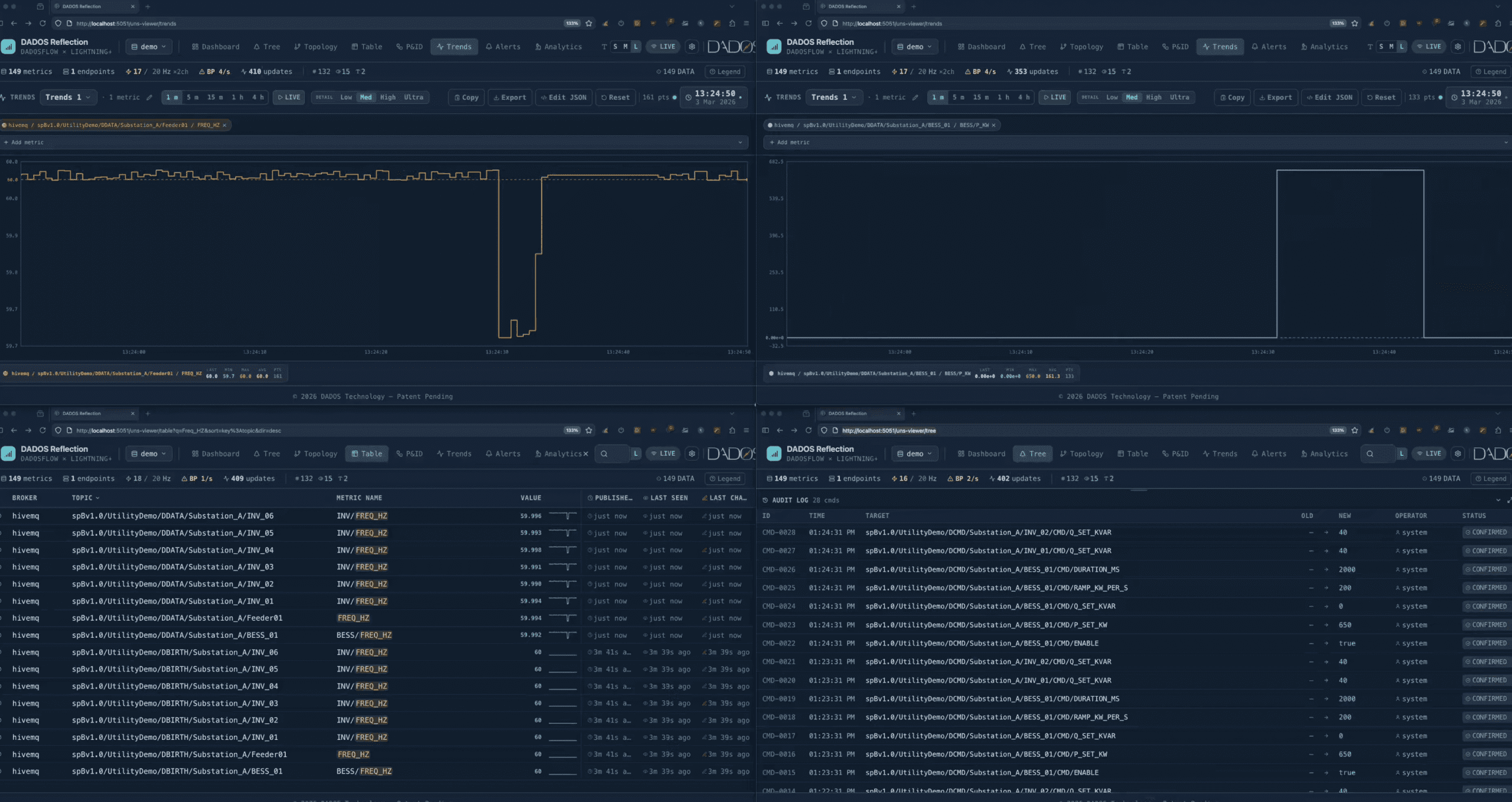
Energy Ramp Demo

A distribution feeder operates in steady state with six solar inverters online. When grid frequency drops from 60.0 Hz to 59.7 Hz, the system detects excess demand in real time.

A DCMD places BESS-01 into frequency-support mode, ramping output by 650 kW within configured limits and holding briefly.

Frequency stabilizes and the system returns to normal operation — without manual intervention or control rewiring.